
Anthony v Metcalf:
Why Won't White Jurors Stand Up for Justice?

What follows is not fiction. It is an evidence-based projection of how this case will likely unfold in a Collin County courtroom, drawn from Texas's established legal patterns and recent Batson jurisprudence.
Because I have 1) a class coming up on Sunday, June 7th, 2) just dropped an article on John Brown which took me a month of research to produce and 3) preparing for the Harlem Book Fair, I KNOW I am unable to write fast enough to address current events.
I’m bleary eyed, though, and this is a very fast write because I can’t get a question out of my head.
Here is the background context: on April 2, 2025, a thunderstorm delayed a high school track meet at David Kuykendall Stadium in Frisco, Texas. Yes, Texas, so you already know racism is the order of the day!
Inside a team tent, a verbal dispute erupted between two 17-year-old student-athletes from rival schools: Austin Metcalf, who was white, and Karmelo Anthony, who is Black.
According to police reports and witness testimonies, the confrontation quickly escalated from a demand for Anthony to vacate the tent into a physical altercation. Within moments, Anthony pulled a pocketknife from his backpack and stabbed Metcalf once in the chest. Metcalf later died from his injuries at a hospital, and Anthony immediately surrendered to authorities, weeping hysterically and stating he acted to protect himself. (I got that from Wikipedia, so consider the source!)
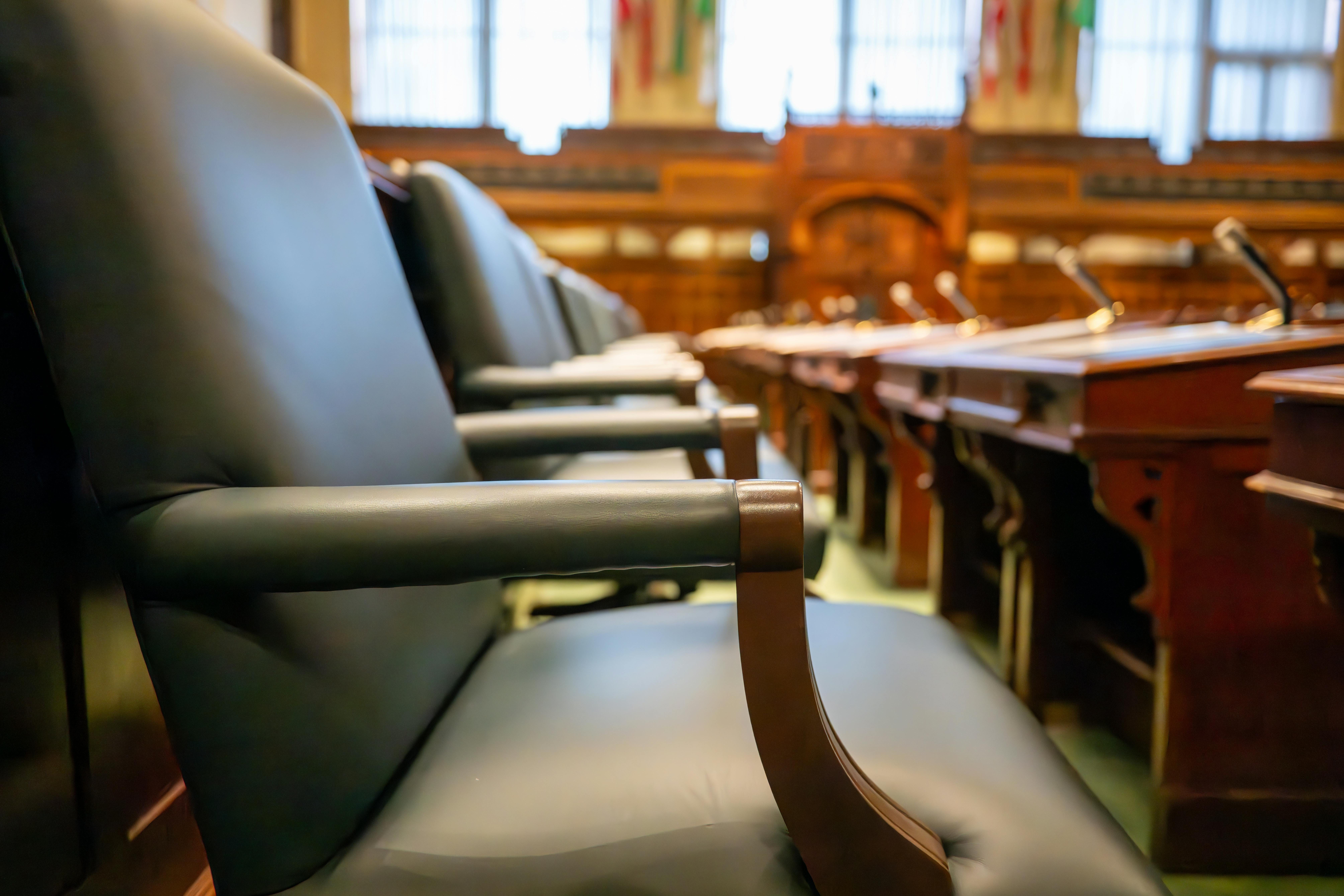
Now, fast forward to June 3, 2026. We are inside a Collin County courtroom. Following three days of intense jury selection drawn from a pool of some 600 citizens, a 12-person jury—along with six alternates—has been officially seated. Not a single Black juror sits on that bench!
During the selection process, on the last day, the prosecution utilized peremptory strikes to remove the final three remaining Black women from the pool.
The defense immediately leveled a Batson challenge, arguing these potential jurors were being excluded based strictly on race. The prosecution counter-argued a race-neutral justification: the women were struck because they worked as educators of school-aged children.
District Judge John Roach Jr. accepted the state's reasoning, overruled the defense's challenge, and permitted an all-white jury to be solidified.
As opening statements begin, Anthony faces first-degree murder charges and a potential life sentence as an adult, while his defense rests entirely on Texas self-defense and stand-your-ground laws.
As I have been exploring in the past half-dozen articles I’ve published on Substack, The seating of this all-white jury presents a profound psychological and cultural contradiction in the European American consciousness. It is a byproduct of collective cognitive dissonance!
Let me explain using what I hope is a familiar story to illustrate my point. Millions of white Americans praise, honor, and profess to embrace the legacy of Mother Rosa Parks. They teach their children about her historic defiance on December 1, 1955, when she sat on a Montgomery bus and refused to collude in her own oppression. They view her as a shining example of individual integrity—someone who calmly accepted the immediate legal punishment of arrest, booking, fingerprinting, and jail time without weaponizing shame or guilt against her oppressors, who genuinely believed they were simply enforcing the law to maintain the social contract, be it segregation or otherwise.
Yet, after eight white people were seated on that Texas jury the remaining four European American citizens sat in that Collin County jury pool and watched the systematic extraction of every Black prospective juror, a glaring disconnect occurred. If these white citizens truly loved and internalized the strength of Rosa Parks, why did they not emulate it?
My question is: Why did they not stand up, look Judge Roach in the eye, and refuse to participate in an institution actively reproducing a white supremacist cultural outcome? Why did they choose the safety of compliance over the necessary sacrifice of a contempt of court charge?
When confronted with the demand to match the courage they so deeply admire in historical Black figures, European Americans frequently retreat into a state of perceived impotence. They construct distinct psychological defense mechanisms to justify why they cannot—or will not—disrupt the machinery of structural racism.
1. "Just Doing My Job"
The first and most pervasive/frustrating rationalization I can observe relies heavily on a deeply ingrained faith in the absolute fairness of the legal system. (Or is it faith that they, as individuals, are fair?) White jurors often tell themselves that because the judge approved the state's "race-neutral" reasoning - the educator exemption - the process must be valid. They convince themselves that they are merely passive, neutral cogs in a legally sound machine, they absolve themselves of moral responsibility. Just like under segregation, they normalize their participation by thinking, "I didn't create this system, and the judge says it's legal, so it isn't my place to disrupt it." This allows them to avoid seeing that choosing silence within an oppressive structure is a direct act of collusion.
2. "The Insider Strategy"
The second rationalization is rooted in a false sense of strategic heroism. A white juror watching an all-white panel form will often think, "If I speak up and get held in contempt, I will be thrown out of the room. If I am replaced by another white person who is racist then I can't help anyone. It is better for me to stay silent, get on the jury, and try to be the lone voice of reason during deliberations." This thought process completely bypasses the power of external disruption. It allows the individual to avoid the immediate, terrifying social consequences of a public refusal—such as fines or jail time—while comforting their conscience with a hypothetical future where they play the quiet savior.
3. “White Supremacy Culture is All I Know”
The third rationalization is driven by a deep-seated fear of losing white social capital and disrupting collective racial comfort. To stand up in a crowded Texas courtroom and refuse a judge’s order requires breaking a silent contract of white solidarity. It forces the individual to bear the immediate discomfort of being labeled "difficult," "radical," or a traitor to their peers. “White citizens” look at the immense suffering Mother Rosa Parks endured—the constant death threats, the loss of her employment, the terror of a 1950s Alabama jail—and subconsciously decide that their own temporary legal and social comfort is worth more than a Black teenager's right to a jury of his peers. They admire her strength precisely because it cost her everything, yet they refuse to spend a single fraction of their own social safety to match it.
I can’t hide in whiteness, like my European American friends and family can. I guess that is why I am struggling with this question.
Now over 500 days into this second Trump Administration, why would you want to?
 | A guest post by
|
Wonderful article! I remember hearing about the killing last year, but I hadn't heard about the jury selection. I wish I could say that I was surprised. I grew up in Texas, and I've met people that have exemplified all three of the defense mechanisms that you outlined. To my shame, I used to utilize the insider strategy myself.
I think white women are prone to that one more than anything else. It helps us to hide, while simultaneously soothing our sense of guilt because we can imagine that we're going to help in the future. It scratches that itch without us actually having to do anything.
And growing up in that environment, there's also another option that might bear consideration. The defense mechanisms you created had roots in fear, which led to retreats into the comfort of structure or cultural familiarity or internal rationalizations. A lot of the people I grew up with wouldn't have had any of those fears, because they never would have considered standing up to the judge at all. The South has a pretty insidious educational deficit all across the board, but especially when it comes to Black history an our part in it. Far too many white people (everywhere, but in the South especially) seem to think that some vague bad stuff happened in the past, but everything's fixed now, so what's the point talking about it or thinking about it at all? And if you do, then you're purposely stirring up trouble. They're terribly racist people, of course, but they would be genuinely hurt if you told them that they were thinking or acting in a harmful manner.
So I can easily imagine that some of the jurors would be quiet because they want to use the insider strategy or whatnot, but I can also imagine some of them would see those women being led away and nod to themselves, thinking no further than that the judge had done his duty. Too deluded to even feel the fear of being trapped in whiteness.
Do you want to consider the facts of the case?