
What White Supremacists Actually Want
(It’s Not What You Think)

Slowly, under this second Trump Administration, I am learning how, and why, segregation inside the United States lasted so long.
American apartheid, as I have seen it called before, did not endure merely through the cold mechanics of legislation, which meets the current generation’s definition of oppression, nor was racism sustained solely by the overt terror of the noose and the nightrider. Those were the outer expressions of segregation’s inner movements.
White people persisted in this behavior because discrimination built a home inside the American psyche. Despite Black people choosing to resist, segregation remained because it established an unwritten, deeply internalized contract of psychological arrangement—a group-agreement and accepted guarantee that white anxiety would always be quieted by Black humiliation.
To watch this Second Trump Administration re-align itself around the grievances of the dominant caste is to witness the frantic restoration of that contract. We are seeing, in real-time, the desperate re-fortification of a (necessary) psychological border wall. And the foundation of that wall is a simple, lethal expectation: the demand for deference.
Racism, in its daily operational reality, functions off white bodies receiving automatic deference from Black, Brown, and Indigenous people. This deference is not a polite social custom: it is a tax extracted under the duress of white racial violence.
Historically and presently, the white body (collectively and individually) inside the United States is conditioned to move through society as an absolute sovereign. It expects the right-of-way in conversation, the benefit of the doubt in conflict, and the immediate lowering of the gaze from the colonized. This submission is the price of safety for the oppressed.
When a Black person stops to politely let a white person walk by them on the sidewalk, softens their tone when speaking on the phone, or swallows their outrage when insulted, they are paying a protection fee to prevent the eruption of a violence that is always simmering just beneath the surface of the law.
From 1886 - 1972, these social transactions were codified as legal segregation. Today, under the current political climate, it has been privatized and decentralized. The expectation of deference has returned with a raw, vengeful appetite. It is present in the boardroom, the grocery aisle, and social media. It is the demand that the so-called marginalized remain small, predictable, and comforting, so that the dominant white-bodied individual personality never has to confront the illegitimacy of its position.
Very few anti-racist European Americans possess the emotional stamina I display daily online and in person to mitigate the comments, the glances, and the casual cruelties–the microaggressions–that happen and make up the content of Black life. They enter the arena of racial discourse with high ideals, but they quickly become utterly exhausted.
This exhaustion does not stem from physical labor, it comes from the devastating psychological tax of witnessing the inner landscape of those who look like them, yet do not ascribe to a universal human ethic. To see one’s own kin, neighbors, and colleagues casually trade in the devaluation of other human beings is a specific kind of horror. It forces the empathetic white observer into a state of chronic cognitive dissonance.
To many Liberal and Progressive European Americans, it seems to land as an absolute betrayal to their sense of Self that white supremacists want—and fundamentally need—this racial deference. The progressive white consciousness has long consoled itself with the myth of inevitable moral progress. They believed that overt white supremacy was a relic of an uneducated past, a regional pathology of the rural South, or a fringe radicalism easily managed by the passage of time.
To discover that this hunger for dominance is widespread, sophisticated, and seated in the highest offices of the land feels like an intimate treason. They are forced to realize that the people they share holidays with, the people who manage their funds and teach their children, are actively invested in a racial caste system.
Without this deference, the white supremacist feels vulnerable in a manner that “good white people” simply cannot explain. When an oppressed person refuses to participate in the rules designated for their racialized social position by lowering their eyes or softening their stance in a way a white person can barely notice, the white supremacist experiences a profound disorientation. These “bad white people” act as if their very lives are in mortal danger while standing before a non-submissive Black or Brown body.
This is not hyperbole, although I wish it was. Instead, it is the pathology of the tyrant. When you have equated your safety with absolute control, any expression of equality from the subjugated looks exactly like an act of aggression. The absence of submission is interpreted as an active threat.
To the master class–I use this phrase on purpose–a Black person standing upright, unyielding and self-possessed, is a terrifying mirror. It implies that the matrix of power is fragile, that the illusion of natural superiority is broken, and that the bill for historical atrocities might finally be coming due.
Worse yet, the white supremacist is typically nice, cordial, and polite when interacting with other white people who do not inspire any racial stress. They are good neighbors; they return borrowed lawnmowers; they hold doors open at the church. (Yuck!)
Consequently, unless you, as an anti-racist European American, explicitly step out of line and “pretend to be a white supremacist”—unless you do not test their boundaries by remaining silent during a racist joke or nodding along to a coded complaint—you will never know the truth. You will remain blind to the fact that the “neutral white people” around you do not like, respect, or view Black, Brown, and Indigenous people as fully human. The polite exterior forms a socially fabricated camouflage, masking a cold indifference to the destruction of non-white lives.
Those white bodies that are not actively insulting others, committing blatant acts of discrimination, or physically assaulting Black, Brown, and Indigenous people sincerely believe that race, racism, and whiteness are not affecting them or the people they interact with.
They have been granted the luxury of historical amnesia. They can imagine a pristine, colorblind space where race, racism, and whiteness do not exist, and attempt to create this reality within a brutal racial caste system through sheer willpower alone.
They believe that if they do not say the n-word, the n-word carries no power. They believe that if they smile while underfunding Black schools, or speak softly while displacing Brown communities, the systemic violence vanishes. This is the core delusion of the moderate: the belief that innocence can be maintained through passive participation in an oppressive structure.
When these white bodies are finally forced to learn that race is directly affecting them—that they are not neutral observers but active beneficiaries of a predatory arrangement—they do not default to repentance. Instead, they project white rage onto Black, Brown, and Indigenous people.
They look at the disruption of their peace and equate the psychological and emotional pain they feel to “reverse racism.” In their minds, the injustice is not the system (behavior of the white body politic) itself, but the fact that they are being asked to pay for the racism of other white people, over whom they possess no direct influence. They internalize their discomfort not as conviction, but as victimization. It simply does not feel good to be treated like an oppressor when you have spent your entire life believing you are a good person.
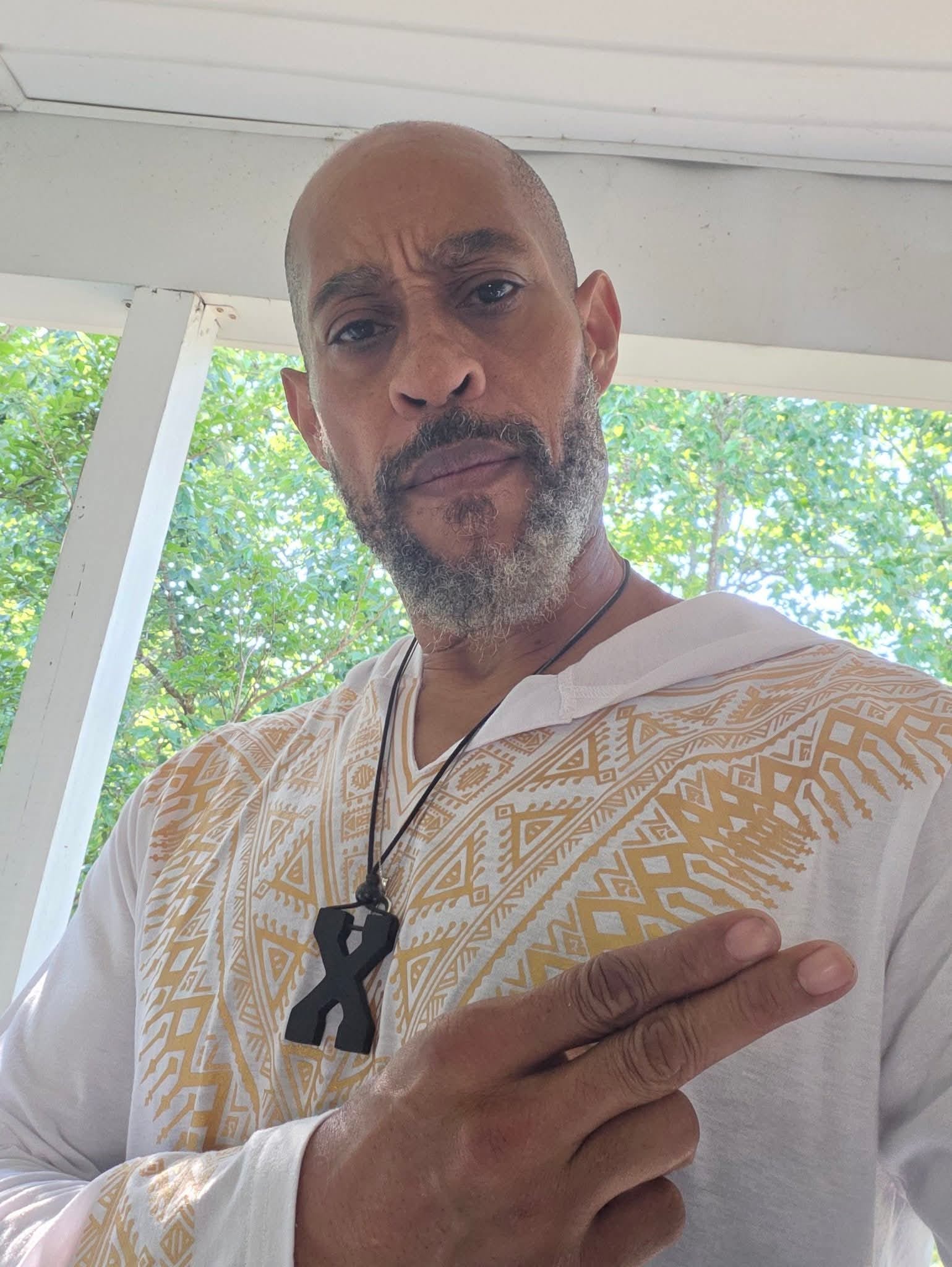
It is precisely within this psychological theater that I choose to stage my resistance. I refuse to give that deference. I refuse to adjust my posture, alter my language, or contour my presence to accommodate the fragile self-image of white emotional safety.
And because of this refusal, over the past few weeks on my Facebook wall white men have been melting down under the strength I demonstrate towards them.
When they encounter a Black body that does not bow, their internal compass spins out of control. They are legitimately hurt. The pain they feel is real, but it is the phantom limb pain of a Babylon falling. My appearance of not caring about their racial stress generates even more inner torment for them. They are accustomed to their emotional weather dictating the climate of the room. When their tears and their fury fail to move me, their world tilts on its faulty axis.
This second Trump Administration did not create this losing power dynamic: it merely stripped away the requirement for white supremacy to wear a mask. It has shown us that segregation lasted because the dominant culture loved the comfort of its seat more than it loved justice.
By Black people withholding our deference, we break the spell of white racial innocence. We force the individual personality to show its attachment to white supremacy culture to itself, and in doing so, we reclaim the terrifying, liberating truth that our own inherent humanity is undeniable.
 | A guest post by
|